Golfer's Elbow, what's the difference with Tennis Elbows?
21 Juni 2024
Read : 883
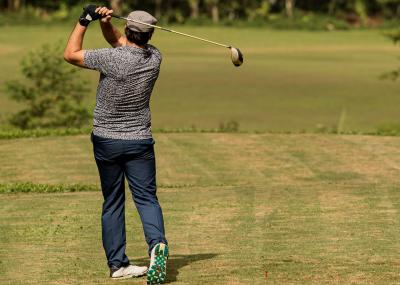
Causes, symptoms, effects, to how to prevent and deal with Golfer’s Elbow
Golfer’s Elbow, which has the medical term medial epicondylitis, is a form of tendonitis that causes pain and inflammation in the tendon that connects the elbow and forearm. Golfer’s Elbow is a type of Repetitive Strain Injury which occurs due to repetitive movements of the wrist and arm which cause small tears in the tendons.
Just like Tennis Elbow, Golfer’s Elbow can be experienced by anyone, not just golfers. However, Golfer’s Elbow attacks more women aged 45 years and over. If Golfer’s Elbow is left untreated, it can spread throughout the hand and cause permanent damage, such as limited elbow range of motion, chronic pain, and weakening your grip.
For this reason, to avoid Golfer’s Elbow, let's look at the complete explanation below!
A. Causes of Golfer’s Elbow
Although playing golf can increase the risk of developing Golfer’s Elbow, in fact, more daily activities can trigger Golfer’s Elbow. For example:
- Squeeze the laundry as hard as you can and repeatedly;
- Holding an object for too long;
- Work using a screwdriver;
- Too strong and turning the key or door knob too often;
- Carrying out rock climbing activities;
- Lifting weights, throwing or hitting objects in an inappropriate position;
- Using a racket that is too small or too heavy; as well as
- Lack of warming up before exercising.
The activities above can be categorized as excessive and take too long if they are carried out for more than one hour a day for several days.
B. Symptoms of Golfer’s Elbow
Generally, the symptoms experienced by Golfer’s Elbow sufferers are the same as those suffering from Repetitive Strain Injury. However, there are several symptoms that people with Golfer’s Elbow specifically experience:
- Pain and soreness that appears when pressed on the inside of the elbow. The pain can feel worse when doing certain movements similar to swinging a golf club. Sometimes, the pain can spread along the inside of the forearm.
- The elbow feels stiff and difficult to move so that pain occurs when making a fist.
- Weakening or decreased ability to grip the hands and wrists.
- The appearance of tingling or numbness that spreads to the fingers, usually felt in the ring finger and little finger.
C. Difference between Golfer’s Elbow and Tennis Elbow
After listening to the causes and symptoms of Golfer’s Elbow above, it seems that Golfer’s Elbow is very similar to Tennis Elbow. So, how do you differentiate between the two? Here are the differences between the two:
- Location: The location of the muscles affected by Golfer’s Elbow is on the inside of the elbow, while Tennis Elbow is on the outside of the elbow.
- Muscles Affected: The muscles affected by Tennis Elbow are the extensor carpi radialis brevis and extensor digitorum. Meanwhile, the muscles affected by Golfer’s Elbow are the flexor carpi radialis and pronator teres.
- Risk of Affectation: Although anyone can experience Golfer’s Elbow or Tennis Elbow, data shows that Golfer’s Elbow attacks more women over the age of 45, while Tennis Elbow attacks more men over 30 years.
D. Tips to Prevent and Treat Golfer’s Elbow
- Complete your body's fluid needs every day and make sure your body is always hydrated.
- When exercising, wear complete and appropriate protection.
- Avoid forcing yourself to lift heavy weights that are beyond your body's ability.
- Use a light and comfortable racket when playing badminton or tennis.
- Start doing light exercise at least once a week and don't skip short stretches in the midst of busy work every day. Stretching can increase muscle flexibility, increase blood circulation to the muscles, and bring nutrients and oxygen needed to strengthen muscles.
- Warm up before exercising and cool down after completing exercise. Exercising without proper warm-up and cool-down can make muscles stiff and tense. Warming up makes the muscles not "shock" when they are used. When exercising, muscles produce lactic acid as a result of anaerobic metabolism and cooling down can help reduce lactic acid production in muscles so that muscle stiffness and fatigue are reduced. The risk of injury such as muscle cramps will also decrease.
- To treat Golfer’s Elbow, use the RICE method as first aid, which stands for Rest, Ice, Compress, and Elevate. Where:
- Rest (R): Rest your hands and use them less.
- Ice (I): Cool the painful part of your elbow with ice for 20 minutes to reduce pain and inflammation.
- Compress (C): Bandage your elbow to limit blood flow if possible.
- Elevate (E): Position your painful elbow higher than the rest of your body, especially when lying down. Don't let the sore muscle be crushed so that blood doesn't flow to the injured area.
- Stick to light exercise. Quoting Health Line, there are several light exercises that can be done when affected by Golfer’s Elbow, namely:
- Isometric wrist strengthening (extension)
- Isometric wrist strengthening (flexion)
- Resisted wrist extension
- Restrained wrist flexion
- Something that has also been proven to be effective in treating Golfer’s Elbow is to do a massage before starting light exercise. Come to PHRM Indonesia to get Remedial Massage treatment and care consultation. PHRM will help return muscles to their normal position and shape. Immediately schedule your arrival and choose the therapist you want. PHRM Indonesia will provide a specialist full body muscle massage, without oil, fast, precise and hassle-free!
By : Rastianta Rinandani & Glen Stevano Tanihatu
Source:
- https://www.mayoclinic.org/diseases-conditions/golfers-elbow/symptoms-causes/syc-20372868
- https://my.clevelandclinic.org/health/diseases/21711-golfers-elbow-medial-epicondylitis
- https://www.healthline.com/health/exercises-for-golfers-elbow-2
- https://www.freepik.com